Bukhara is as old as its rival city, Samarkand, though its actual age
is still in question. Now it is known that as long back as 2500 years ago
an urban settlement thrived in the area. The city flourished in 9-10
centuries under the Samanid Dynasty. Overshadowed by Samarkand in
Tamerlaine's time, it became more important as the capital of the Bukhara
Khanate during the reign of the Sheybanid Dynasty.
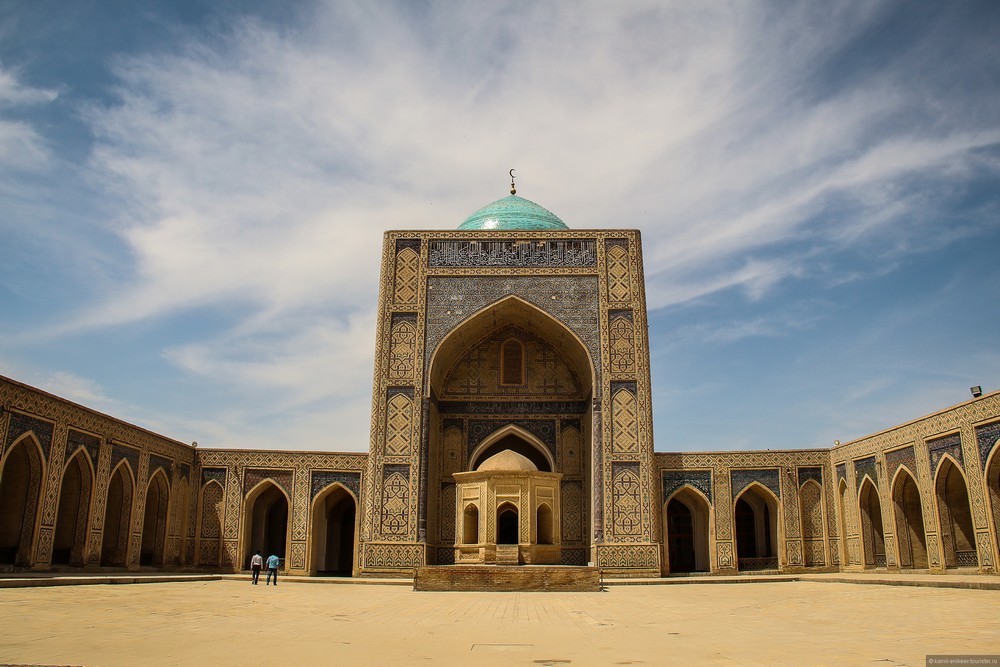
View of Old Bukhara
Though considered as the Pillar of Islam and the religious capital of Central
Asia, where some of the Prophet's kin and Islamic saints were buried,
Bukhara was home for other religions, for example, a synagogue still
operates here.
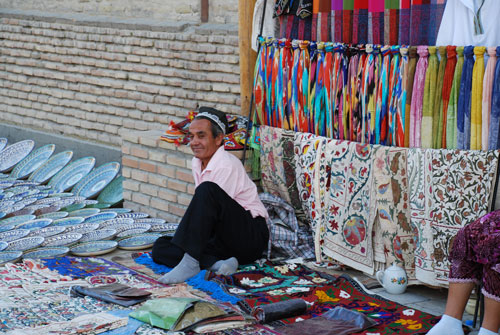
Artisan in Bukhara
At all times it was a city of poetry and fair tales. Its famed scholars and
writers such as Avicenna and Rudaki, made Bukhara's name known worldwide.
Bukhara's people are hospitable and dignified, they are proud of their city
and welcome guests.
Ark Citadel
The residence of last Emirs of Bukhara, Ark Citadel, dates back to the 5th
century. First it was mentioned in Abubakir Narshakhi's History of Bukhara,
covering the period from 899 to 960.
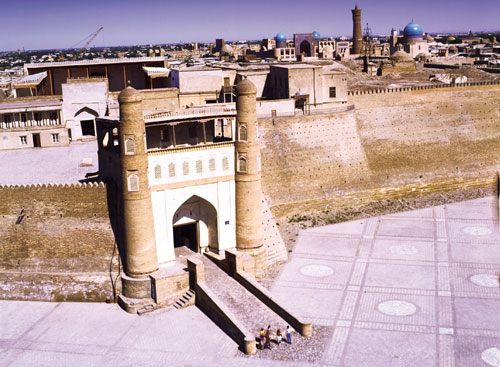
Ark Citadel
This stupendous fortress was once the home for scientists and people of
arts. Its unique library was a source of wisdom for Avicenna, Rudaki,
Farabi and Omar Khayam. Gloomy cells for prisoners and the
throne yard of the Emirs to this day smell absolute power and royal vanity.
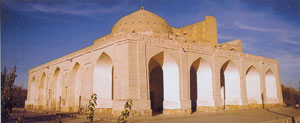
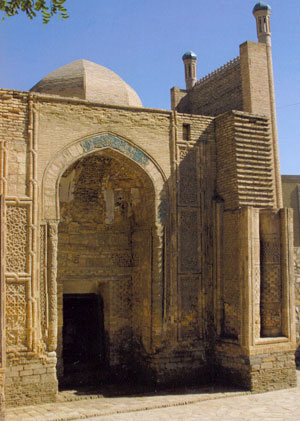
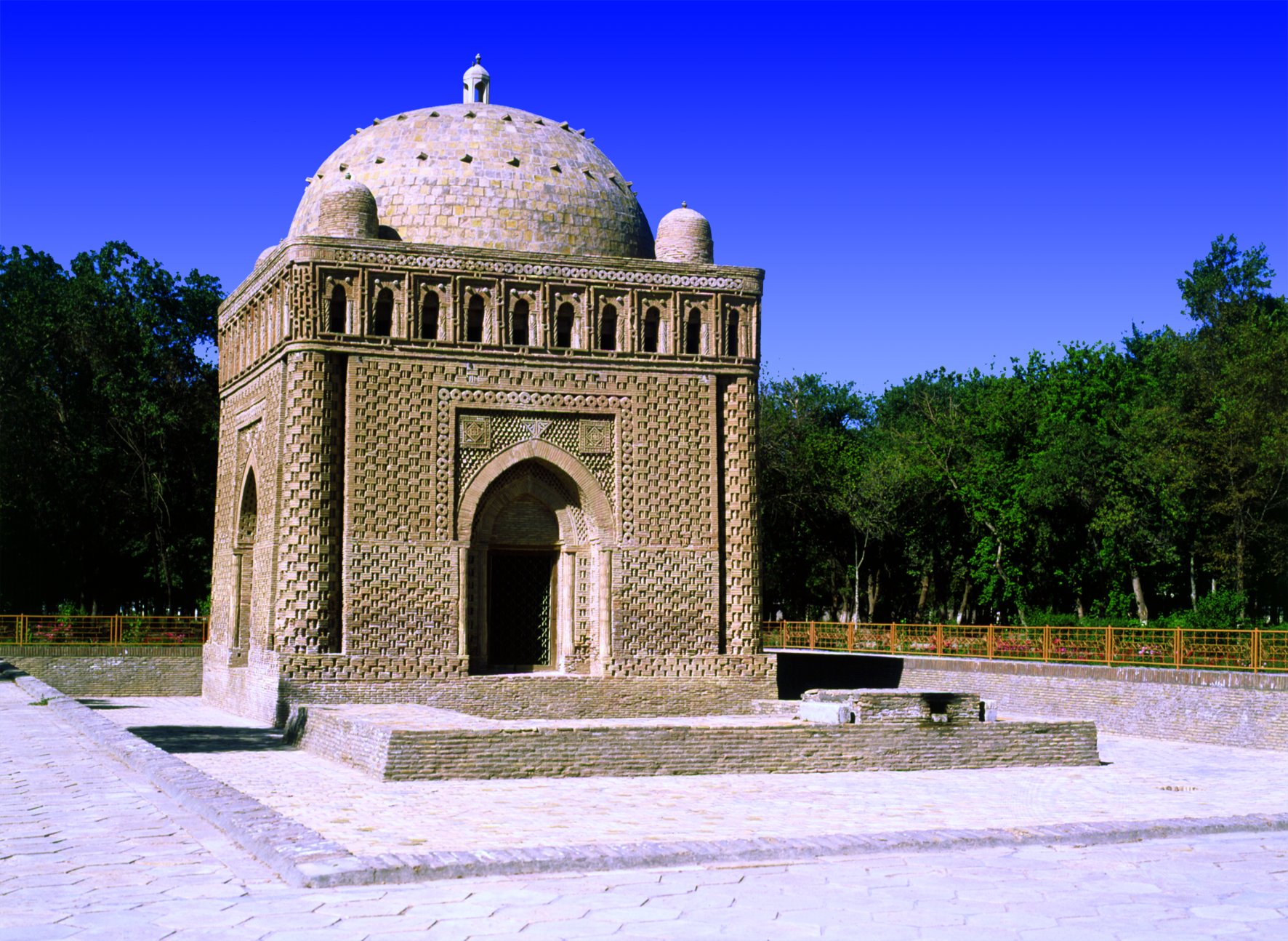
Ismail Samani's Mausoleum
This is the Bukhara's oldest building (about 905AD) accommodating the shrine
of Ismail Samani, the founder of the glorious Samanid Dynasty. He built it
for his father.
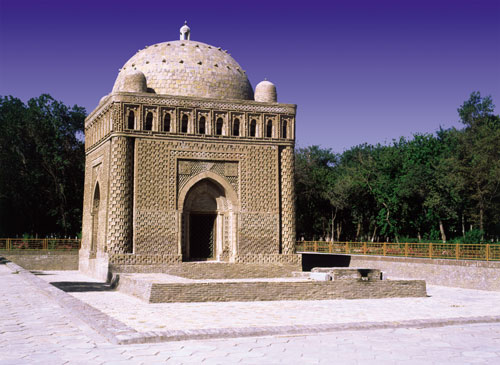
Ismail Samani's Mausoleum
Some say it is the most beautiful and elegant though rather simple edifice
in Central Asia. Delicate baked terracotta brickwork still bears holy signs
and symbols of the pre-Islamic Zoroastrian religion. Its magnificent
appearance and actual antiquity make it one of the greatest Bukhara's
attractions.
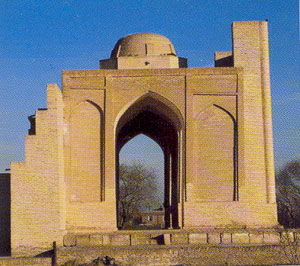
Chashma Ayub Mausoleum
In Central Asia there are numerous places which were supposedly attended by Saints centuries ago. One of such is the Chashma Ayub well. The legend says that it was an arid land and its
inhabitants suffered from lack of water. Iowa, the Biblical prophet, visited the area and decided to help the people. He stroke the ground with his staff and a crystal clear water source sprang there. Till present local people believe that water in the source has curative powers. Later on, a cemetery emerged around the well.
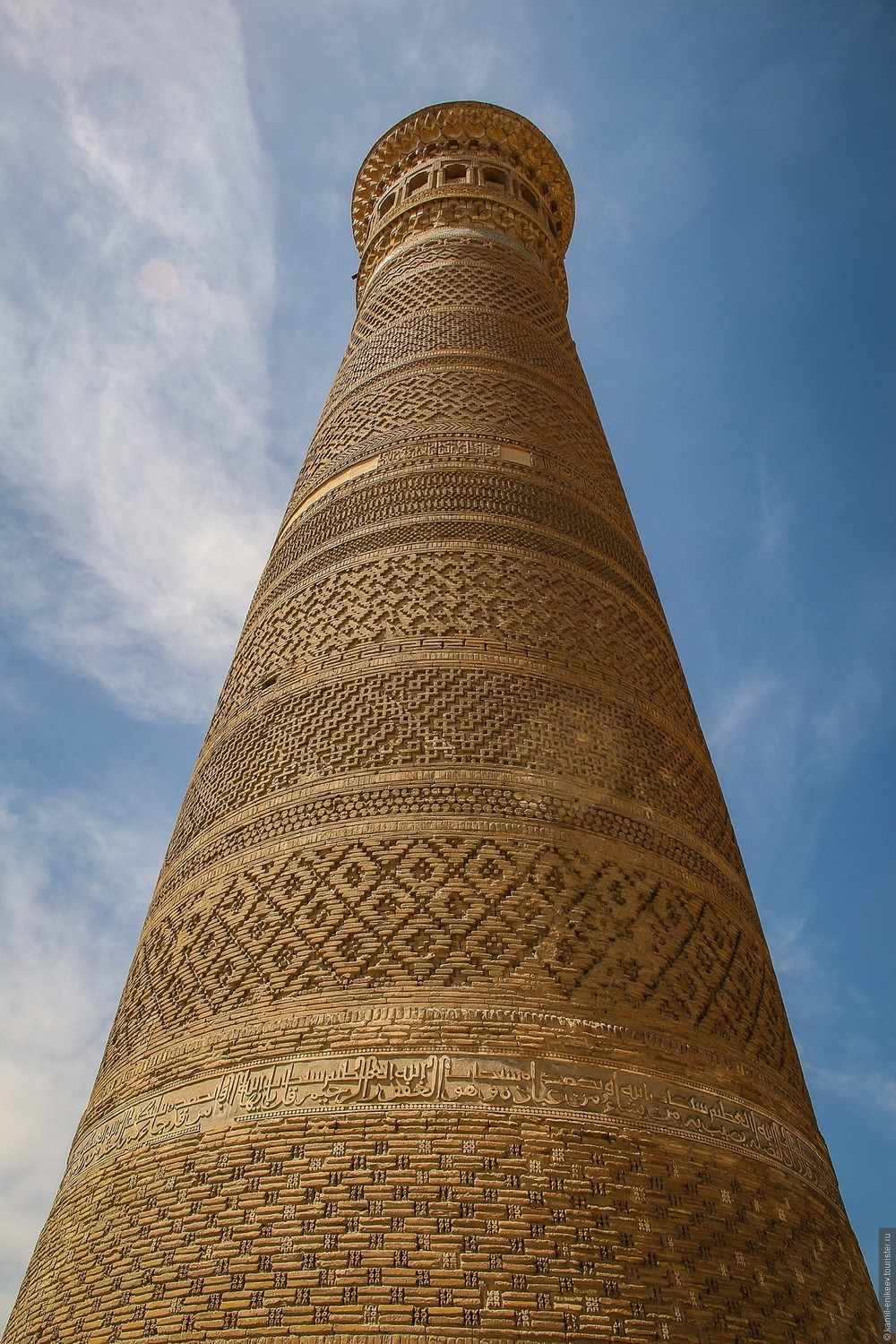
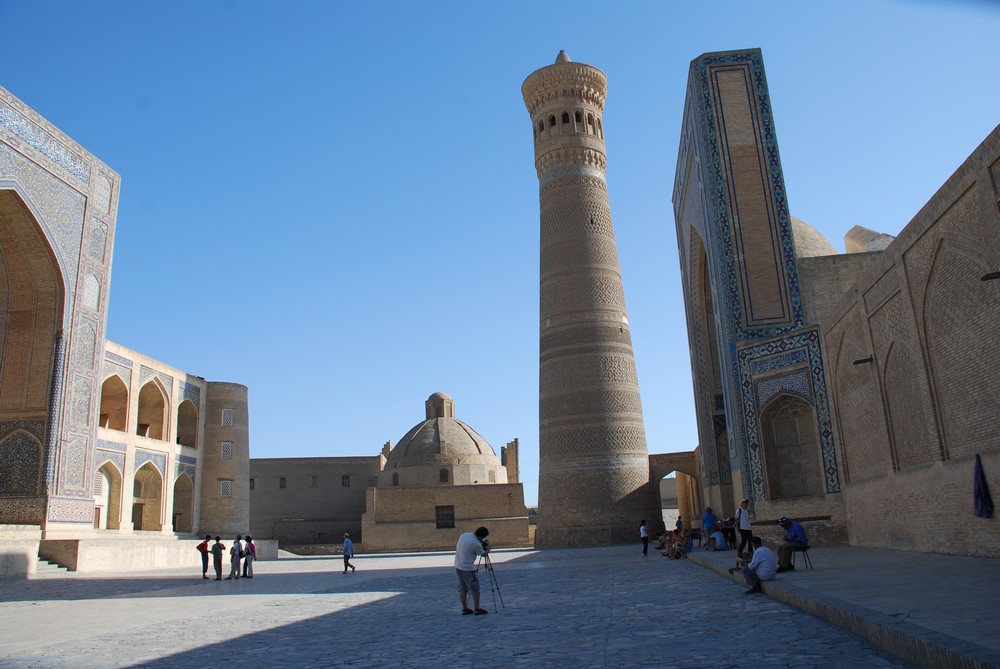
Poyi Kalyan Minaret and Mosque
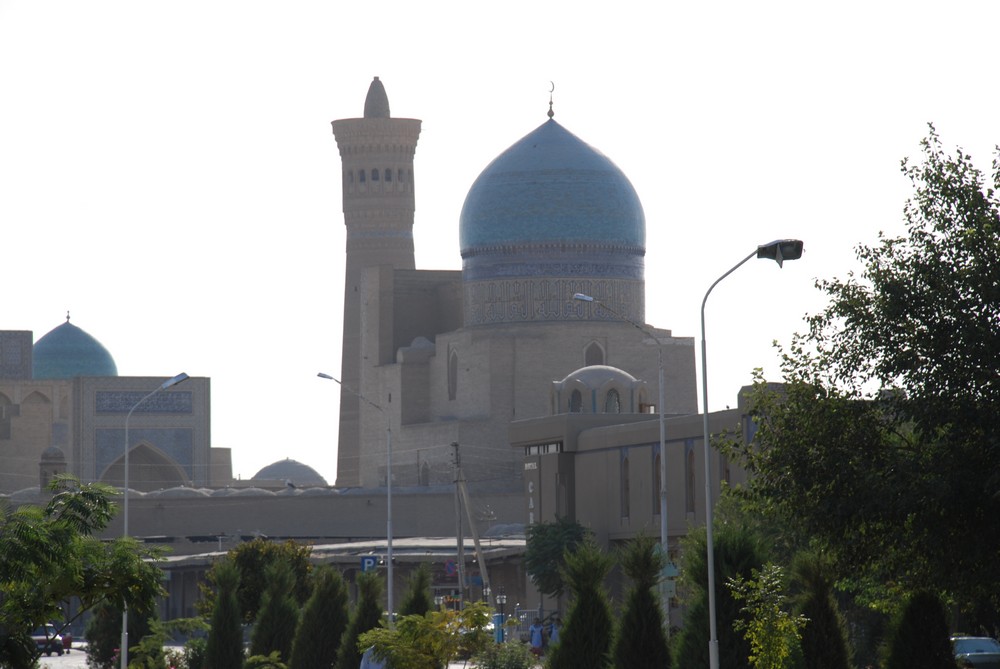
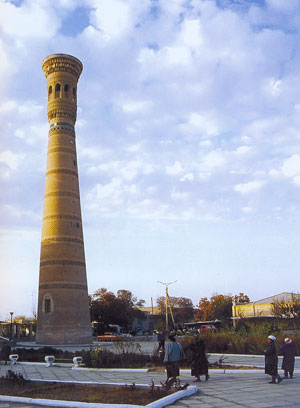
For more than eight centuries the view of Bukhara was shaped by the miraculous tower of the Kalyan Minaret. It was the tallest building in Central Asia, serving the town's inhabitants
as a beacon and watchtower. The legend says that the great Genghis Khan had
entered the square near the tower after defeating the city's defenders and
razing half of the city, and his helmet fell off his head when he looked up
at the minaret. He had to bend and pick it up from the ground.
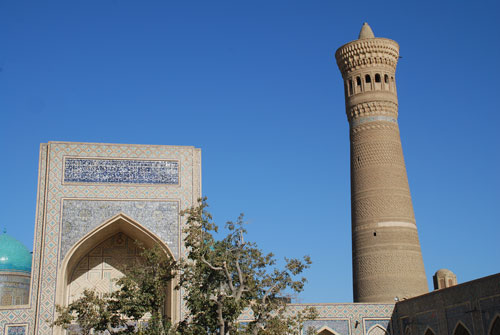
Poyi Kalyan Minaret and Mosque
"I never bent to anyone in the world," the mighty warrior said. "But this structure is so great that
it deserves to be spared." This is how the splendid tower survived and now
tourists work their way up its steep 105 inner stairs to enjoy the
gorgeous view of today's Bukhara.
In 1514 the Kalyan congregational mosque emerged near the tower, where up
to 12,000 people used to gather for their prayers.
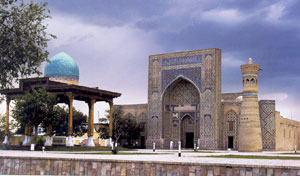
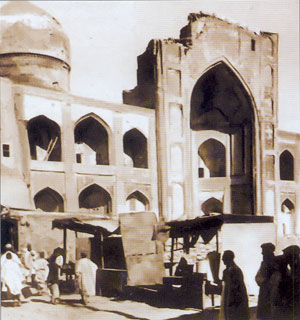
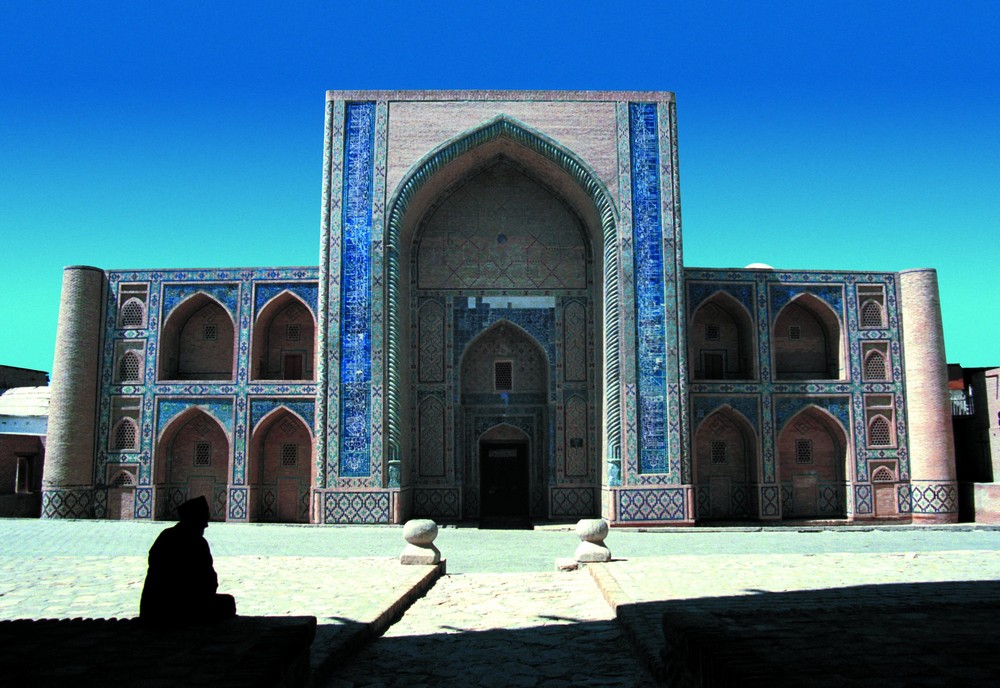
Ulugbek Madrassah
Ulugbek Madrassah is the only survived building in Bukhara that
belongs to the period of Ulugbek, the great astronomer and scientist. Bukhara
reached a peak of cultural and economic prosperity under Ulugbek's rule, quite
opposite to its secondary role in the Timur's Empire.
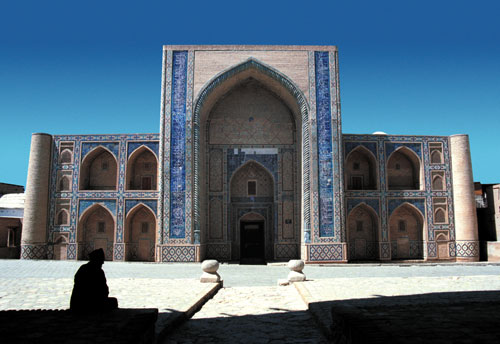
Ulugbek Madrassah
The clergy of Bukhara, a city called Islamic Capital of Central
Asia, at all times was hostile to Ulugbek. A man of knowledge and enlightenment,
he chose conservative and strict Bukhara to build his first educational
institution, and wrote on the doors of the madrassah that aspiration for
knowledge must be a duty for each man and women of Islam.
In the madrassah's 80 cells students studied the Arabic
language, geometry, astronomy and religious subjects from dawn till dusk. The
study took from 15 to 20 years and for decades its knowledgeable graduates were
replenishing the cohort of oriental scholars and poets.
Sitorai Mohi Hasa - Summer Residence
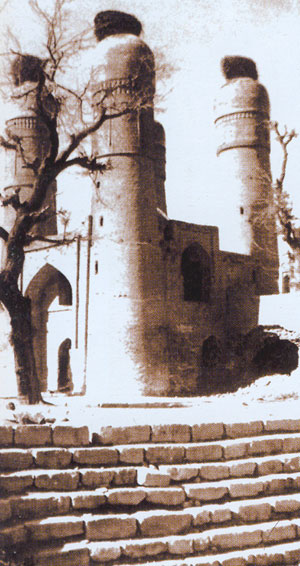
Four kilometers north of Bukhara, a large and lavish residence of Emir Akhadkhan was established. Its construction began in the late 19th century when the Emir, amazed by the achievements of the Western world, sent best Bukhara architects and builders to Saint-Petersburg, Russia, to learn from Russians new construction methods.
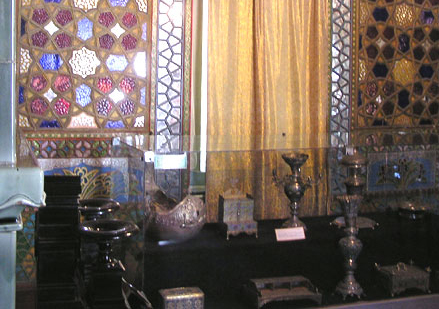
Sitoran Mokhi-Khosa Palace
According to some sources, Amir Akhadkhan, while
in Russia, fell in love with Russian princess Olga. He cordially invited
her to Bukhara. Upon return he initiated ambitious construction works near
the old Palace, willing to surprise Olga with his wealth and skills of
Bukhara artisans. Unfortunately, she never came. Bolsheviks overthrew the
Tsar in Russia and captured the royal family. Olga, like other members of
the Romanovs family, was executed in 1918.
The halls of the Palace represent a fanciful
blend of Western-style architectural trends with local traditions. 30
artisans worked for more than two years to decorate the famous White Hall
with dazzling volutes of carved plaster ornaments on the mirror
background. Emir's Harem in the back of the orchard, Reception Halls, the
quiet and cooling atmosphere of the place offer a nice opportunity to walk
away from day-to-day troubles and immersed in the spirit of the old times
when life was generous and unhurried and days were passing by slowly.
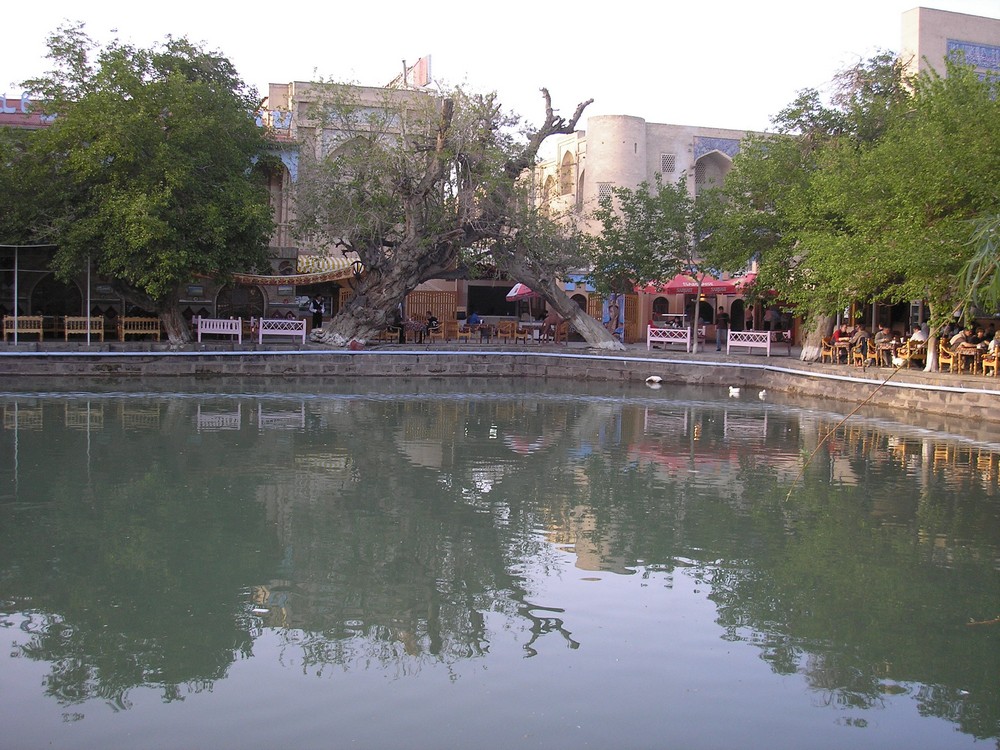
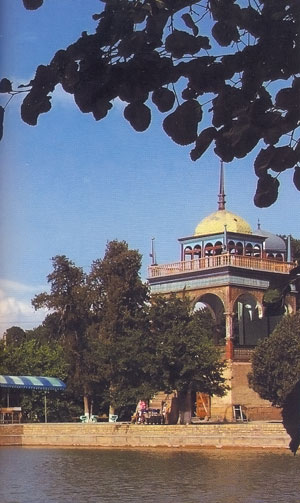
Lyabi Hauz
The busiest place in old Bukhara is the area around the pool (Lyabi
Hauz). Here local people and numerous tourists enjoy the evening cool
after tiring heat of summer days, sitting in the shade of gigantic ancient
mulberry trees and listening to the sound of fountains and quacks of swans
in the artificial lake.
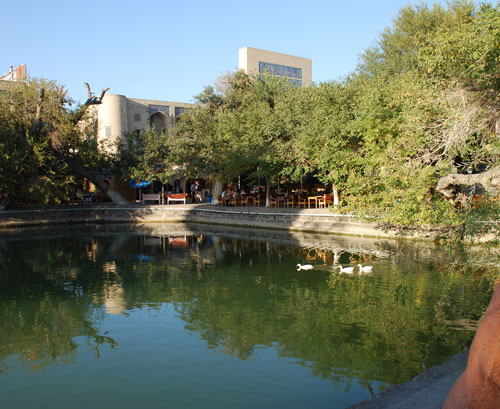
Lyabi Hauz
Nadir Divan Beghi, a powerful minister of Imam Kuli Khan owes the fame for the construction of the complex. It contains the minister's Khanaka,
Kukeldash Madrassah, and Nadir Divan Beghi Madrassah.
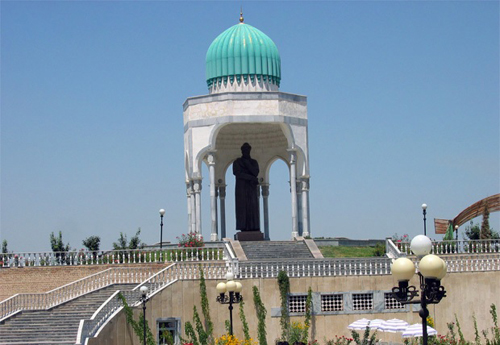
In the shady park next to the Madrassah, there is a monument to
Khodja
Nasriddin, a folk hero of Central Asia, known also as Afandi. He was
the character of numerous tales about the everlasting conflict between
stupid but rich aristocracy and witty but poor peasants.
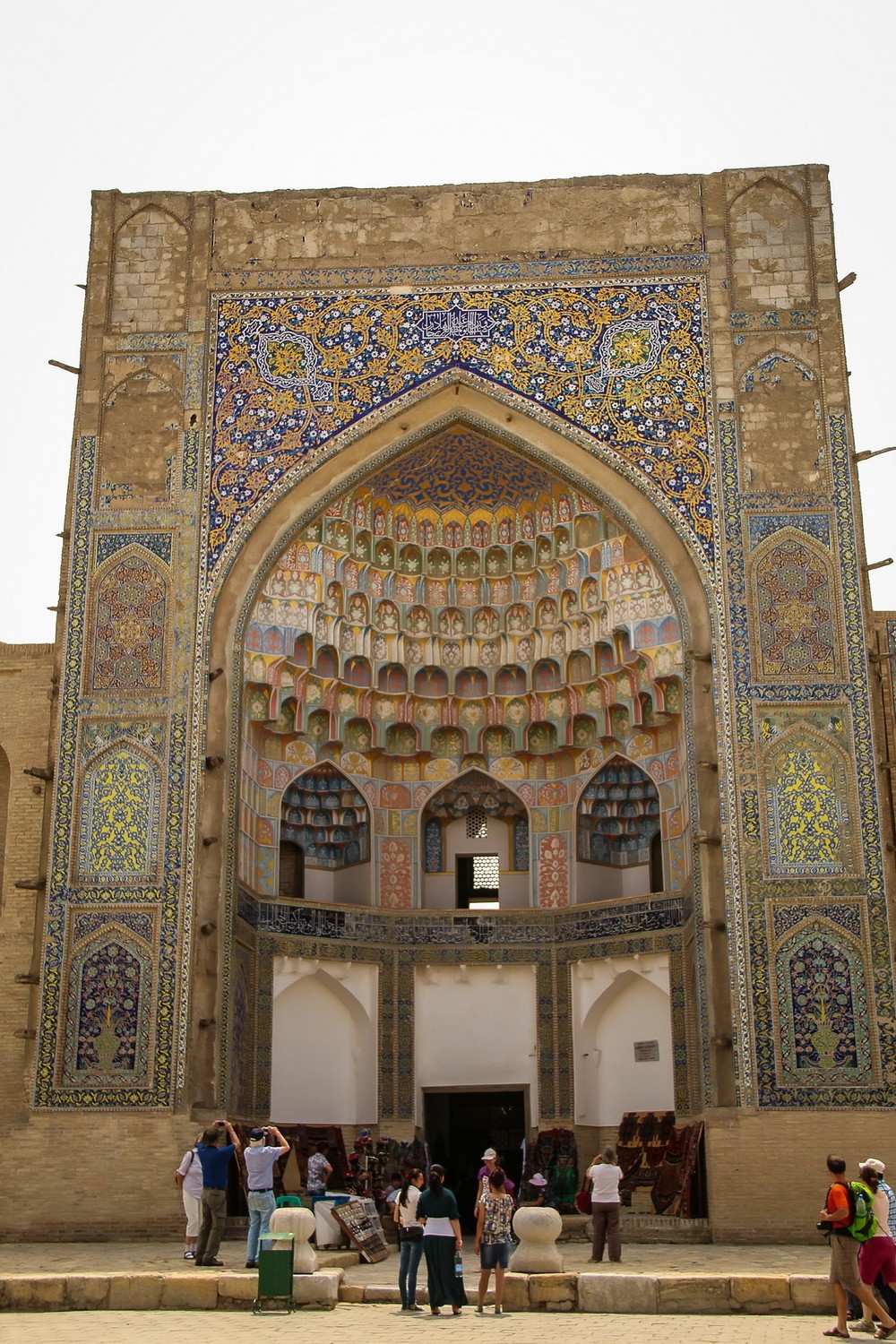
Kulbaba Kukeldash
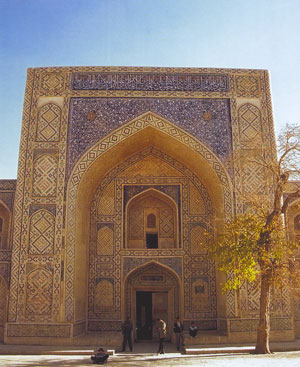
Kulbaba Kukeldash Madrassah, with its 160 cells was the biggest
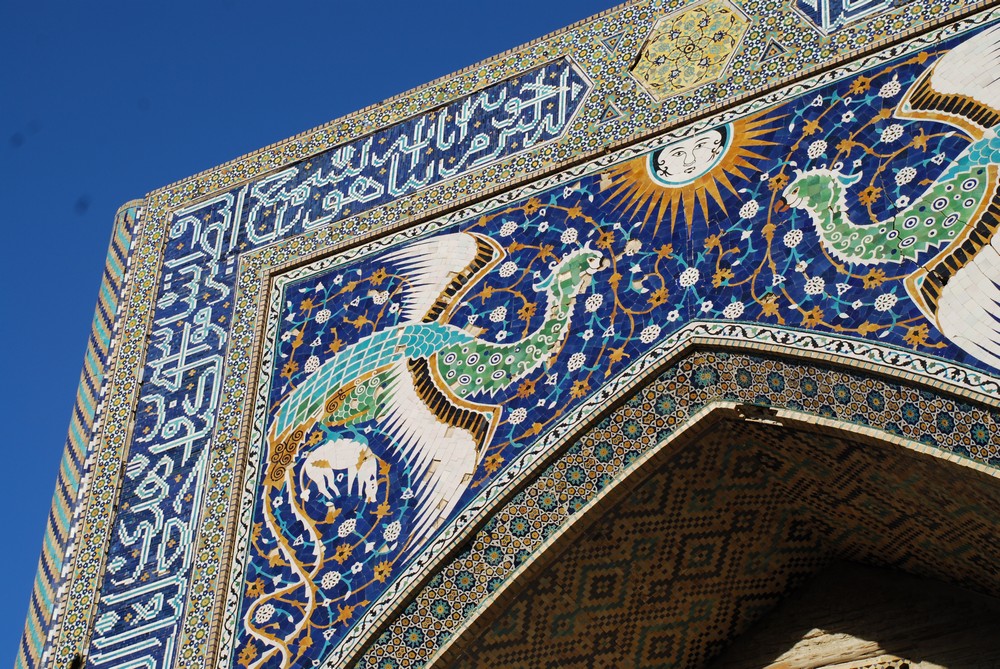
Islamic school in Bukhara. The adjoining Nadir Divan Beghi Madrassah bears
images of fabulous animals and birds on its portal. This is the place where
tourists can see folk shows performed by professional girl dancers, who are as
pretty as skillful. Also, here young and tall Asian beauties proudly demonstrate
high fashion dresses, made by local designers. An elaborate blend of Western
shapes and traditional decor, along with the undeniable charm of the models,
make male tourists' cameras click really hard.